Banisters: Terminology, Glass Guards and Handrail Choices
This guide separates banisters, railings, guards and handrails so buyers can describe a staircase clearly before requesting a quotation from George.
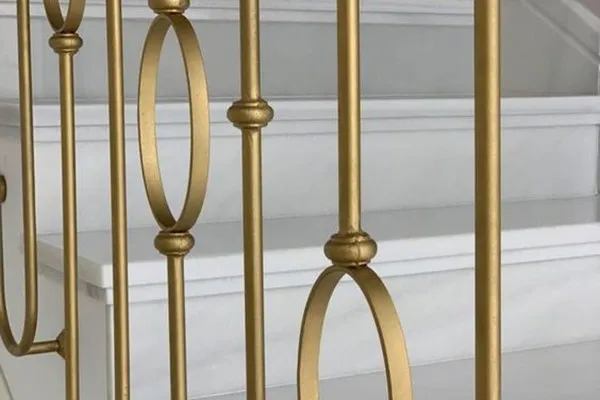
Banisters in Staircase Planning
In staircase planning, banisters are the protective assembly along the open side of a stair, usually combining a graspable rail with infill that prevents falls. The term is used loosely for the handrail, the balustrade and the newel posts together. For safety, separate the part a person grips from the guard infill that closes the openings. Buyers can send drawings so George can confirm the requested infill, fixing and finish.
A clear plan records stair width, pitch, landing positions, substrate and the side where the guard is needed. It also records whether the buyer expects a graspable rail, glass or metal infill, and a painted or metallic finish. These inputs let George review a quotation against the buyer’s drawings instead of guessing a style from a photo. Related detail on banisters and their parts can be agreed from the same drawing.
Banister, Railing and Handrail Terminology
A banister railing is not a precise trade term: it can mean the whole balustrade beside a stair or the handrail at its top. In architecture, a railing is a guard or support at an edge. Here railing describes the complete guard assembly, while handrail describes the graspable component. The guard infill—glass, metal balusters, cable or panels—closes the openings below and between supports. Buyers should define the role and submit drawings for George to confirm feasibility.
On a staircase, banisters and railings work with newel posts, fixings and the stair structure as one safety system. The handrail gives continuous support; the balustrade carries infill and transfers loads to posts, stringers or slabs. Height, opening sizes and anchorage are checked against the project’s local code, which the designer and authority having jurisdiction interpret. A drawing-based enquiry lets George confirm the assembly, including railing and balusters details.
Modern Banister Design Cues
Modern banister design usually starts with a simple handrail profile, fewer joints and a visually open guard. Common cues include square or round rails, concealed fixings, slim posts, horizontal rods, cable or glass infill, and mixed materials such as wood with powder-coated metal. These are general options, not a promise that every style is a stock George product. Buyers should submit drawings to confirm infill, fixing and finish.
Finish choices should follow the stair’s use and cleaning routine. A painted metal rail may suit a crisp interior, while a timber cap changes the feel under hand. Keep the handrail depth comfortable for grip and avoid abrupt changes at landings. Where a glass guard is used, a slim top rail in brushed nickel, brass or matte black can be added for tactile guidance. George reviews the buyer’s drawings and requirements in the quotation.
Glass Banister and Guard Checks
A glass banister is best treated as glass guard infill, with a separate graspable handrail where the project requires one. Tempered glass is generally used for railings and banisters to provide a modern, open feel. Glass is not a substitute for the grip a handrail provides. At enquiry, buyers can send drawings so George can confirm the requested glass, fixing and finish.
Before choosing glass banisters for a staircase, the project engineer should verify the glass type, thickness, supports, fixings and the supporting construction. The guard must be securely anchored for its load path, and local requirements decide height and opening limits. Exterior stairs may have different requirements from interior stairs. Buyers should send drawings so George can confirm the requested banister configuration. More detail on glass for railing covers infill and base options.
Black Finish and Material Cues
A black banister is a finish direction rather than a single product. Black can be applied to steel, aluminum or timber, and the substrate changes weight, maintenance and the fixing method. Before confirmation, record the profile, sheen level, touch-up expectations and how the surface will be cleaned. Buyers can send drawings so George can confirm whether the requested black finish and banister details can be made.
Staircase railings are typically made of stainless steel, wood, glass, wrought iron, or aluminum, each offering different benefits in durability, style, and maintenance. Black powder coating on aluminum or steel is a common general choice; black-stained wood is another. George’s product categories include modern aluminum railings, and the sales team reviews the buyer’s drawings and requirements before quoting.
Planning a New Banister
Planning a new banister starts with measuring the stair, not choosing a picture. Record the total rise, going, width, landing layout, nosing position and the substrate where posts or base channels will fix. Note the handrail-versus-guard role, infill preference and any local code checks required by the project. Buyers should send drawings so George can confirm the custom railing or banister details.
The enquiry should state quantity, material, finish, glass or metal infill, post style and delivery requirements. George’s sales team first clarifies needs and budget before giving a rough quotation; payment and delivery terms are confirmed in the quotation. George can review stairs, railings and whole-house design requirements together where the banister is part of a larger package.
Graspable Banister Handrail
A graspable banister handrail is the continuous rail a person holds, not the glass or metal infill below it. Graspability depends on profile shape, clearance from the wall or guard, fixing brackets and continuity around landings. Local requirements set the dimensions and exceptions, and the designer or inspector interprets them. George does not promise a standard profile; buyers should send drawings so the rail, fixing and finish can be reviewed in the quotation.
For a comfortable grip, the rail should allow fingers to wrap without hitting the balustrade. A slim top rail over glass can provide tactile guidance, but it must be detailed as part of the guard. Where a wall rail is used, bracket spacing and substrate are agreed from the drawings. George’s handrail sourcing covers glass balustrade, stainless steel cable railing, aluminum posts, wood top rails, base covers, tensioner hardware and project packaging.
Getting a Custom Banister from George
George Design & Construction Co., Ltd. (George) is a one-stop building materials supplier in China. George Group was established in 2006. George Group is based in Foshan, China. George has a 10,000-square-meter showroom and has served 100+ countries. Buyers send drawings or photos, dimensions, materials and quantity; George’s sales team clarifies needs and budget before giving a rough quotation.
For custom staircases, typical production time is 4–8 weeks, depending on the complexity of the design; custom floating staircases typically take 4 to 6 weeks, depending on the complexity of the design and the materials selected.
A drawing-based enquiry is the practical route for a custom banister or railing. George can review the stair layout, guard role, infill, fixing and finish, and confirm the requested configuration in the quotation. Buyers can learn more about George and the company’s service scope.
Request a quotation
Describe the staircase, railing or tread project, its size and location, and George will reply with design options and a quotation.
Or write to sales@staircasesupplier.com